
Why the Shift to Handmade Ayurvedic Soap is Happening in India

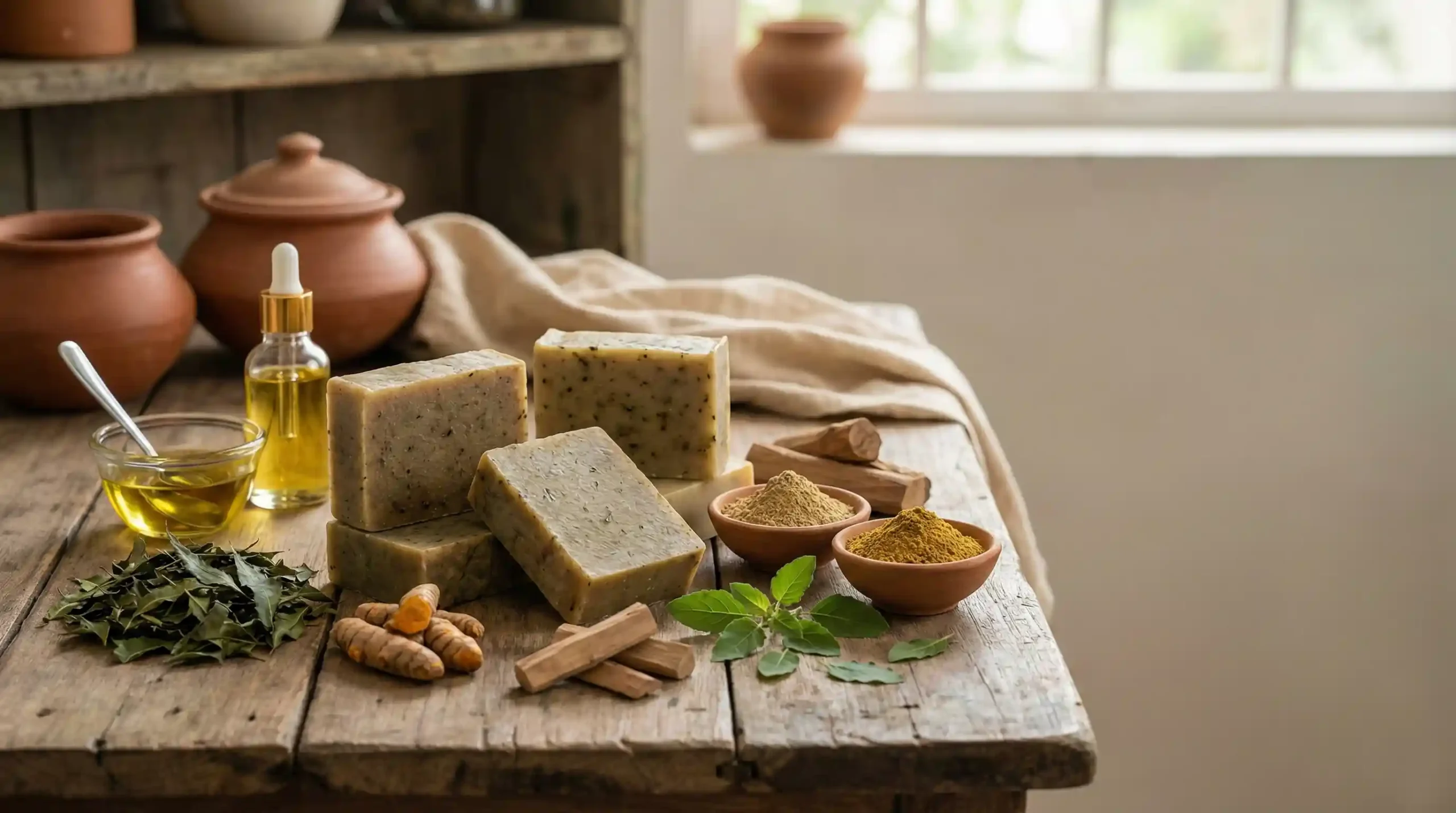
The primary reason for this change is awareness. Most commercial soaps sold in India are not actually “soaps” by definition-they are synthetic detergent bars. They contain harsh surfactants like SLS (Sodium Lauryl Sulfate) that create a lot of foam but strip away the skin’s natural oils. In the varied Indian climate-from the extreme humidity of Mumbai to the dry heat of Rajasthan-this stripping of moisture leads to many common skin issues like itchiness, premature aging, and dullness.
Handmade Ayurvedic soaps offer an alternative that feels personal. When you hold a bar that has been cured for weeks and infused with real herbs, you can feel the difference. It doesn’t just clean; it heals. Indian consumers are increasingly realizing that what we put on our bodies is just as important as what we put inside them.
The Ayurvedic Philosophy of Skincare
In Ayurveda, skin is seen as a mirror of our internal health. Everything in the universe, including our bodies, is governed by three Doshas: Vata, Pitta, and Kapha. Each person has a unique combination of these, and our skin reflects that.
- Vata Skin: Usually thin and tends to get dry or flaky easily, especially during the Indian winters. It needs deep nourishment and warming oils.
- Pitta Skin: Often sensitive and prone to redness, rashes, or sun damage due to the intense Indian sun. It requires cooling and calming ingredients like Sandalwood or Rose.
- Kapha Skin: Can be oily, with larger pores and a tendency for congestion. This skin type benefits from detoxifying herbs like Neem and Turmeric.
Handmade Ayurvedic soaps are often formulated keeping these specific needs in mind, rather than offering a “one-size-fits-all” solution.
Common Ayurvedic Ingredients and Their Real Benefits
The beauty of choosing a Handmade Ayurvedic Soap India is the presence of time-tested botanicals. These aren’t just fancy names on a label; they have been part of our culture for centuries.
Neem and Tulsi
Often called the “village pharmacy,” Neem is a powerhouse for anyone dealing with acne or skin infections. When combined with Tulsi (Holy Basil), it creates a soap that is naturally antibacterial. This is particularly helpful during the Indian monsoon when skin infections are common.
Turmeric (Haldi)
No Indian wedding is complete without the Haldi ceremony, and for good reason. Turmeric is a natural skin brightener and anti-inflammatory agent. A handmade soap with real turmeric helps in evening out the skin tone and providing a natural glow without the use of synthetic bleaching agents.
Sandalwood (Chandan)
Sandalwood has been a luxury in Indian skincare for ages. It is incredibly cooling for the skin, making it a favorite for the harsh summers. Beyond the scent, it helps in soothing sunburnt skin and reducing tanning.
Saffron (Kesar)
Kesar is perhaps the most prized ingredient in Ayurvedic beauty. It is known for its ability to improve blood circulation to the skin, which results in a healthier, more radiant complexion over time.
The Importance of Base Oils in Handmade Soap
A major difference between mass-produced bars and handmade ones is the quality of the base. Most handmade soaps in India use cold-pressed vegetable oils.
- Coconut Oil: Provides a rich, bubbly lather and is excellent for deep cleansing.
- Castor Oil: Acts as a humectant, meaning it helps pull moisture into the skin.
- Almond and Sesame Oil: These are often used in Ayurvedic formulations to provide deep Vata-pacifying nourishment.
Unlike commercial brands that often use “soap noodles” made from cheap fats or petroleum derivatives, handmade soaps use these high-quality oils to ensure the skin feels soft even after the bath is over.
The Real Difference: Handmade vs. Commercial Soaps
The most significant scientific difference lies in a substance called Glycerin.
Glycerin is a natural byproduct of the soap-making process (saponification). It is a humectant that keeps your skin hydrated. In large-scale commercial manufacturing, glycerin is often extracted from the soap and sold separately in expensive lotions and creams. This leaves the remaining soap bar harsh and drying.
In Handmade Ayurvedic Soap India, the glycerin stays right where it belongs—inside the bar. This is why handmade soap often feels “sweaty” in humid weather; that’s actually the glycerin attracting moisture from the air.
How to Identify Genuine Handmade Ayurvedic Soap in India
With so many brands claiming to be “natural” or “Ayurvedic,” it can be confusing. Here is how you can tell if a soap is truly handmade and authentic:
- Look at the Ingredients: A genuine handmade soap will list oils (like Saponified Coconut Oil) and specific herbs. If you see ingredients like “Soap Base” without further explanation, it might be a mass-produced base that was simply melted and reshaped.
- Check the Scent: Authentic Ayurvedic soaps usually have a subtle, earthy, or herbal scent. If the soap smells like a strong, synthetic perfume that fills the whole room, it likely contains artificial fragrances.
- Texture and Shape: Handmade soaps are rarely “perfect.” They might have slight color variations or a rustic texture. This is a sign of small-batch production.
- The Price Point: Real essential oils and cold-pressed oils are expensive. If a “Handmade Ayurvedic” soap is being sold for the same price as a mass-market chemical bar, the quality of ingredients is likely compromised.
Long-Term Skincare Benefits
Using a handmade bar is an investment in your skin’s future. In the short term, you will notice less dryness and irritation. In the long term, these soaps help maintain the skin’s natural pH balance and strengthen the skin barrier.
Because they are free from parabens and synthetic preservatives, you aren’t exposing your body to potential endocrine disruptors every single day. Over months of use, the skin tends to regain its natural resilience and “Tejas” (radiance) that Ayurveda speaks of.
Conclusion
Choosing a Handmade Ayurvedic Soap India is a small but powerful way to bring mindfulness back into your daily life. It is about supporting local artisans who put care into every batch and respecting the ancient wisdom of Ayurveda that has served us for millennia.
Next time you go for a bath, think of it as more than just a chore. It is a moment of self-care, a way to cool the body, calm the mind, and nourish the skin with the best that our land has to offer. When we treat our skin with kindness, it always glows back in gratitude.


