
Why people are choosing natural organic soap online

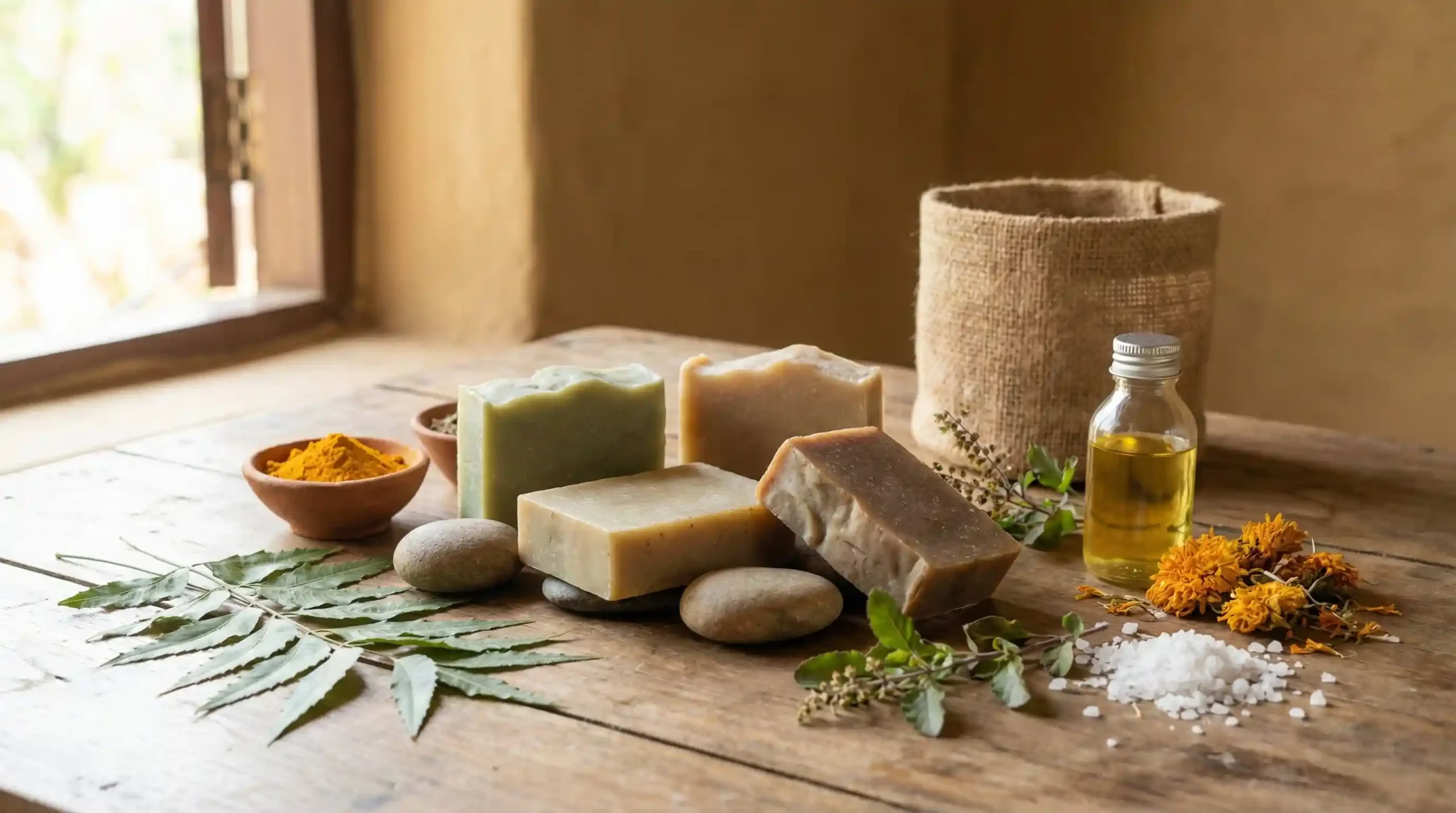
A few years ago, you had to visit a niche boutique or an organic farm to find a truly natural soap. Today, the internet has changed that. The biggest reason people are searching for Natural Organic Soap Online is transparency. When you pick up a bar at a supermarket, you are often looking at a brand name and a pretty picture. Online, you have the space to read the full ingredient list, look at the sourcing of the oils, and read honest reviews from people who have the same skin type as you.
There is also the factor of variety. Indian skin is diverse. Someone in Delhi might need a deeply moisturizing almond oil soap for the winter, while someone in Chennai might be looking for a neem and charcoal bar to handle the humidity. Buying online allows you to find these specific solutions that big commercial brands simply don’t offer in a “one size fits all” box.
Difference between organic soap and commercial soap bars
To understand why your skin feels so different after using a natural bar, you have to look at how they are made. Most “soaps” sold in big stores aren’t actually soap at all—legally, they are often classified as “synthetic detergent bars.” They are made using petroleum-based chemicals and foaming agents like SLS (Sodium Lauryl Sulfate) that create a lot of bubbles but strip away the skin’s natural protective layer.
Authentic organic soap is made through a process called saponification. This is a traditional method where vegetable oils are mixed with an alkali. A major byproduct of this process is glycerin. In commercial manufacturing, this glycerin is often removed and sold separately as expensive lotions or creams. In a natural organic soap, the glycerin stays in the bar. That is why your skin feels soft and hydrated after a bath, rather than tight and “squeaky clean,” which is actually a sign of dryness.
Common natural and organic ingredients and their benefits
In India, we are blessed with a backyard full of skincare treasures. When you look for Natural Organic Soap Online, you will often see ingredients that sound more like a kitchen recipe than a chemistry experiment.
- Neem and Tulsi: These are the gold standards for the Indian monsoon. Their natural antibacterial properties help keep skin infections and heat rashes away when the air is thick with moisture.
- Turmeric (Haldi): Used for centuries in ubtans, turmeric in soap helps with a subtle brightening effect and calms down inflammation.
- Sandalwood (Chandan): Perfect for the harsh Indian summer, it has a cooling effect on the skin and a scent that naturally relaxes the mind after a long day in the sun.
- Aloe Vera: This is a lifesaver for sensitive skin, providing a soothing layer of hydration without feeling greasy.
Importance of base oils in organic soap
While the herbs get all the attention, the real work is done by the base oils. A good organic soap doesn’t use animal fat or cheap mineral oils. Instead, it relies on:
- Coconut Oil: It provides a rich, natural lather and deep cleansing.
- Cold-Pressed Sesame Oil: Very common in Ayurvedic traditions, it is excellent for nourishing the skin and is believed to have deep-penetrating properties.
- Mahua or Castor Oil: These are often used to make the soap bar last longer and to add a creamy texture to the foam.
Using these plant-based fats ensures that the soap is biodegradable. When the soapy water goes down your drain, it isn’t carrying harsh chemicals into our rivers and soil.
How to identify genuine natural organic soap online
With so many brands claiming to be “herbal” or “ayurvedic,” it can be confusing. To find a genuine Natural Organic Soap Online, the first thing you should do is look at the ingredient list. If it just says “Soap Base” or “Fragrance,” be cautious. A transparent brand will list exactly which oils (like Saponified Coconut Oil or Olive Oil) and which essential oils they have used.
Another giveaway is the color and scent. Real organic soaps usually have earthy, muted tones. If a soap is neon green or bright blue, it likely contains synthetic dyes. Similarly, the scent should be subtle. Essential oils like Lavender or Lemongrass have a scent that lingers gently, whereas synthetic perfumes can be overpowering and often trigger headaches or skin redness in sensitive individuals.
Long-term skincare benefits
Switching to organic soap isn’t just about one bath; it’s about the health of your skin over months and years. When you stop using harsh detergents, your skin’s natural barrier starts to repair itself. Many people find that they need less body lotion over time because the soap isn’t stripping their natural oils in the first place.
For those dealing with chronic issues like itchy skin, “winter itch,” or occasional eczema, the absence of synthetic preservatives and artificial fragrances can bring immense relief. It is about giving your skin a break and letting it breathe. You’ll notice that the “glow” people often talk about isn’t from a chemical coating, but from skin that is genuinely hydrated and healthy from within.
Conclusion
Choosing to buy Natural Organic Soap Online is a small but meaningful step toward a more conscious lifestyle. It is a way to support local artisans, protect our environment, and, most importantly, treat our skin with the respect it deserves. In a world full of synthetic shortcuts, there is something deeply satisfying about returning to the simplicity of plant oils and traditional herbs. Your daily bath shouldn’t just be about washing away the dust of the day; it should be a moment of nourishment that leaves you feeling refreshed and connected to nature.


