
The Shift Toward Gentler Skincare: Why Chemical-free Herbal Soap is Becoming an Indian Household Staple

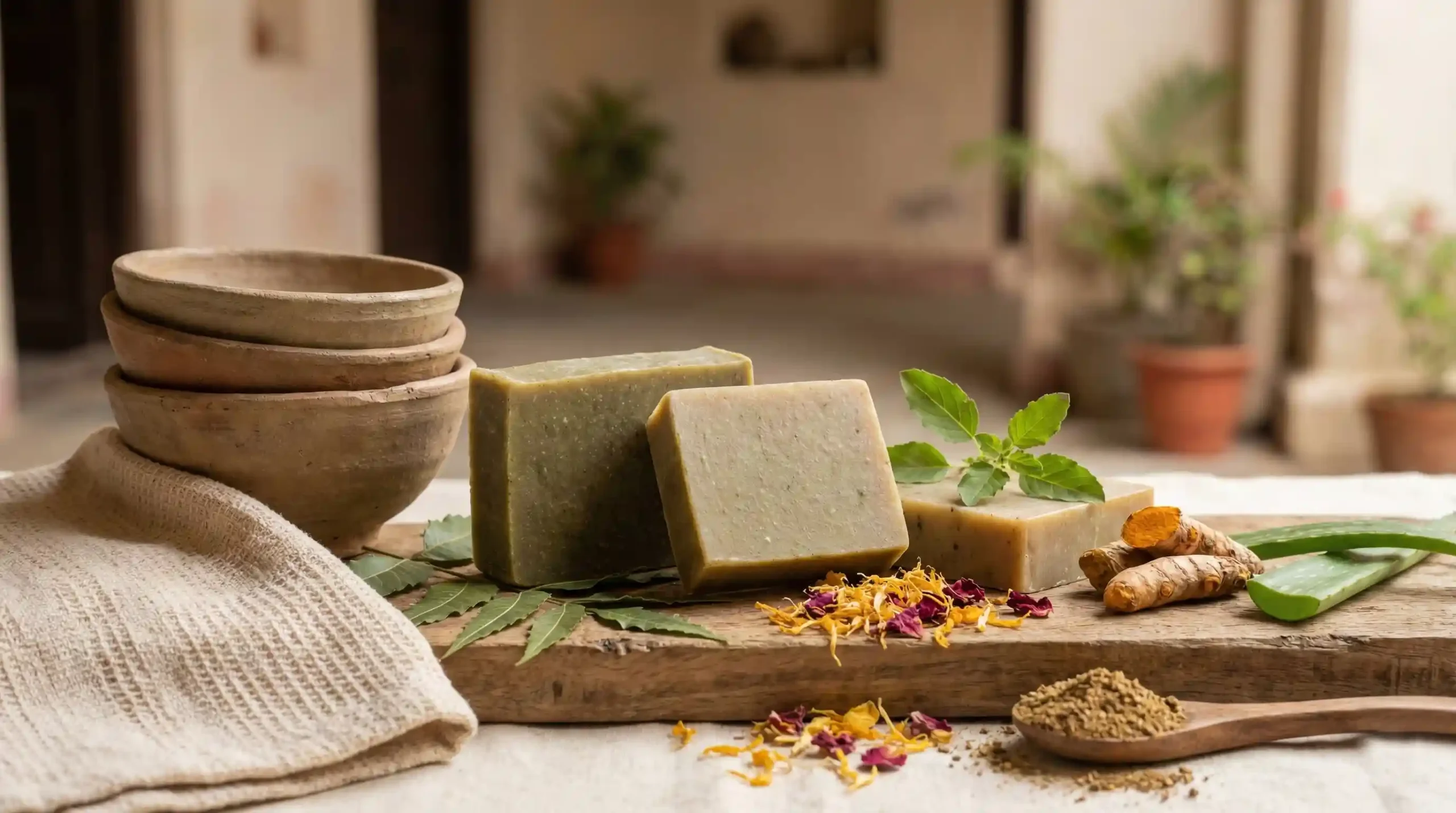
In many Indian homes, the morning routine often begins with the familiar scent of a bath. For generations, we grew up using whatever commercial soap was available at the local kirana store. These soaps produced a lot of foam, smelled like strong perfumes, and left us feeling “squeaky clean.” However, as the climate changes and our awareness grows, many of us have noticed that this traditional definition of clean often comes at a cost. Our skin feels tight, itchy, or unusually dry, especially during the harsh summer heat or the drying winters of the north.
This realization is leading a quiet revolution in Indian bathrooms. People are moving away from mass-produced synthetic bars and returning to roots they once knew. The search for a chemical-free herbal soap isn’t just a trend; it is a return to a more sensible, traditional way of looking after our skin.
Why Chemical-free Herbal Soap is Gaining Trust in India
The Indian consumer is becoming more observant. We are reading labels and questioning ingredients that sound like they belong in a chemistry lab rather than on our faces. The shift toward chemical-free herbal soap is driven by a simple desire: comfort.
In a country where dust, pollution, and varying humidity levels constantly challenge the skin’s barrier, adding harsh chemicals into the mix feels counterproductive. People are looking for products that clean without stripping the skin of its natural oils. There is a growing trust in herbal formulations because they align with the Ayurvedic principles many of us grew up hearing about from our grandparents. It feels more “at home” to use something derived from a leaf or a seed than something created entirely from synthetic surfactants.
The Real Difference Between Synthetic Bars and Herbal Soaps
To understand why the change is necessary, we have to look at what is actually inside a standard commercial soap. Most mass-market “soaps” are technically synthetic detergent bars. They use powerful foaming agents like Sodium Lauryl Sulfate (SLS) to create that thick lather we are conditioned to expect. While SLS is great at removing grease, it is often too aggressive for human skin, leading to long-term dryness or sensitivity.
A genuine chemical-free herbal soap, on the other hand, is usually made through a process that preserves the integrity of its natural ingredients. Instead of harsh detergents, these soaps use saponified vegetable oils and plant extracts. They don’t strip the skin’s moisture barrier. When you use an herbal soap, you might notice the lather is creamier and less “bubbly” than a detergent bar, but the way your skin feels after drying—soft and hydrated rather than tight—is the real indicator of quality.
Common Herbal Ingredients and Their Real Benefits
When we talk about herbal soap in an Indian context, we are looking at ingredients that have stood the test of time. These aren’t just “active ingredients” added for marketing; they are functional components that address specific skin needs.
Neem and Tulsi
These are perhaps the most respected plants in Indian skincare. Neem is known for its ability to handle skin irritations and minor breakouts, which are common in our humid climate. Tulsi acts as a natural purifier. Together, they make a chemical-free herbal soap ideal for those who deal with oily skin or body acne during the monsoon season.
Turmeric (Haldi)
Beyond its kitchen uses, turmeric is a staple for skin health. It helps in evening out the skin tone and providing a subtle, healthy glow without the use of synthetic bleaching agents. It’s a gentle way to manage the dullness that comes from daily sun exposure.
Aloe Vera
In the scorching Indian summer, aloe vera is a blessing. It provides a cooling sensation and helps the skin retain moisture. For someone with sensitive skin that turns red easily, an herbal soap containing aloe vera can be very soothing.
The Importance of Base Oils in Herbal Soap
While the herbs get all the attention, the “base” of the soap is what determines how it feels on your skin. A high-quality chemical-free herbal soap avoids mineral oils and animal fats, opting instead for cold-pressed vegetable oils.
- Coconut Oil: It provides excellent cleaning properties and a natural lather. In many parts of South India, coconut oil has been the primary skincare ingredient for centuries.
- Castor Oil: This helps in creating a rich, creamy foam and acts as a humectant, drawing moisture into the skin.
- Mahua or Rice Bran Oil: Often used in traditional Indian soap making, these oils are rich in vitamins and antioxidants, helping to keep the skin supple.
By using these oils as a base, the soap doesn’t just clean; it nourishes. This is a far cry from synthetic soaps that rely on petroleum-derived wax and fillers to keep their shape.
How to Identify a Genuine Chemical-free Herbal Soap
With so many products claiming to be “natural” or “herbal,” it can be confusing for a buyer. To find a truly chemical-free herbal soap, one must look beyond the green packaging.
- Check the Lather: If the soap creates a massive amount of bubbles instantly, it likely contains SLS or SLES. Natural soaps have a more modest, lotion-like lather.
- The Fragrance: Genuine herbal soaps usually have an earthy or botanical scent. If a soap smells like “ocean breeze” or “strawberry cupcake,” it is likely using synthetic fragrances which can be irritating.
- The Transparency: A real herbal soap manufacturer will usually list all their oils and extracts. If the label only says “Soap Base Q.S.” without explaining what that base is made of, it’s a sign to be cautious.
Skin Benefits with Regular Use
Switching to a chemical-free herbal soap isn’t an overnight miracle, but the long-term benefits are significant. Within a few weeks of consistent use, most people notice that they don’t need to rush for a heavy moisturizer immediately after a bath.
Because these soaps maintain the skin’s natural pH balance, the skin becomes more resilient. You might find fewer dry patches in the winter and less oiliness in the summer. It’s about bringing the skin back to its natural equilibrium. For children and the elderly, whose skin is often thinner and more prone to irritation, these gentle formulations provide a much safer daily cleansing experience.
A Return to Balance
Choosing a chemical-free herbal soap is a small but meaningful step toward a more conscious lifestyle. It is about respecting our bodies and the environment. When we use products that are biodegradable and free from harsh toxins, we aren’t just protecting our skin; we are also ensuring that the water flowing out of our bathrooms is free from harmful chemicals.
In the end, skincare shouldn’t be complicated. It should be a moment of peace in a busy day. By choosing the simplicity of herbs and natural oils, we give our skin the chance to breathe and thrive in its most natural state.


