
Why Indian Winters are Harsh on Our Skin

The Indian winter varies from the freezing winds of the North to the mild but dry breeze in the South. Regardless of where you are, the humidity levels drop significantly. When the air outside is dry, it tends to pull moisture out of your skin through a process called transepidermal water loss.
Common problems we face include:
- Tightness: That uncomfortable pulling sensation right after a bath.
- Flaking: Small white scales that appear on the legs and elbows.
- Itching: The “winter itch” that keeps you restless, often caused by the skin’s barrier being compromised.
- Ashen Skin: Especially visible on deeper Indian skin tones, where dryness leaves a greyish or dull tint.
Most of us make the mistake of turning up the water temperature. While a steaming hot bucket of water feels heavenly when it’s 10°C outside, it actually melts away the natural oils (sebum) that protect our skin. If you pair hot water with a harsh, mass-produced soap, you are essentially degreasing your skin.
Why Handmade Soap Works Better for Dry Skin in Winter
You might wonder why a bar of handmade soap would be any different from the ones you find in the supermarket. The answer lies in the process and the intent. Commercial soaps are often not “soap” by definition; they are synthetic detergent bars. They are designed to clean efficiently and produce a lot of foam, but they don’t care much about the skin’s moisture barrier.
Handmade soap, particularly those made using the cold-process method, is created by mixing fats (oils and butters) with an alkali. This process triggers a natural chemical reaction called saponification. The result is a mild cleanser that retains the integrity of the ingredients. When you use a handmade soap for dry skin in winter, you are using a product that has been formulated to leave some oil behind on the skin rather than taking it all away.
The Magic of Natural Glycerin
One of the biggest secrets of handmade soap is glycerin. In large-scale commercial manufacturing, glycerin—which is a natural byproduct of the soap-making process—is often extracted and sold separately to be used in expensive lotions and creams.
Glycerin is a humectant. This means it attracts moisture from the air and draws it into your skin. In handmade soaps, this glycerin stays right in the bar. When you wash with it, the glycerin helps keep your skin hydrated even after you have rinsed the bubbles away. This is perhaps the primary reason why your skin doesn’t feel “stretchy” or tight after using a natural bar.
Nourishing Ingredients to Look For
When you are looking for a handmade soap for dry skin in winter, you want to check the ingredient list for things that sound like food for your skin. Indian traditional ingredients have known this for centuries.
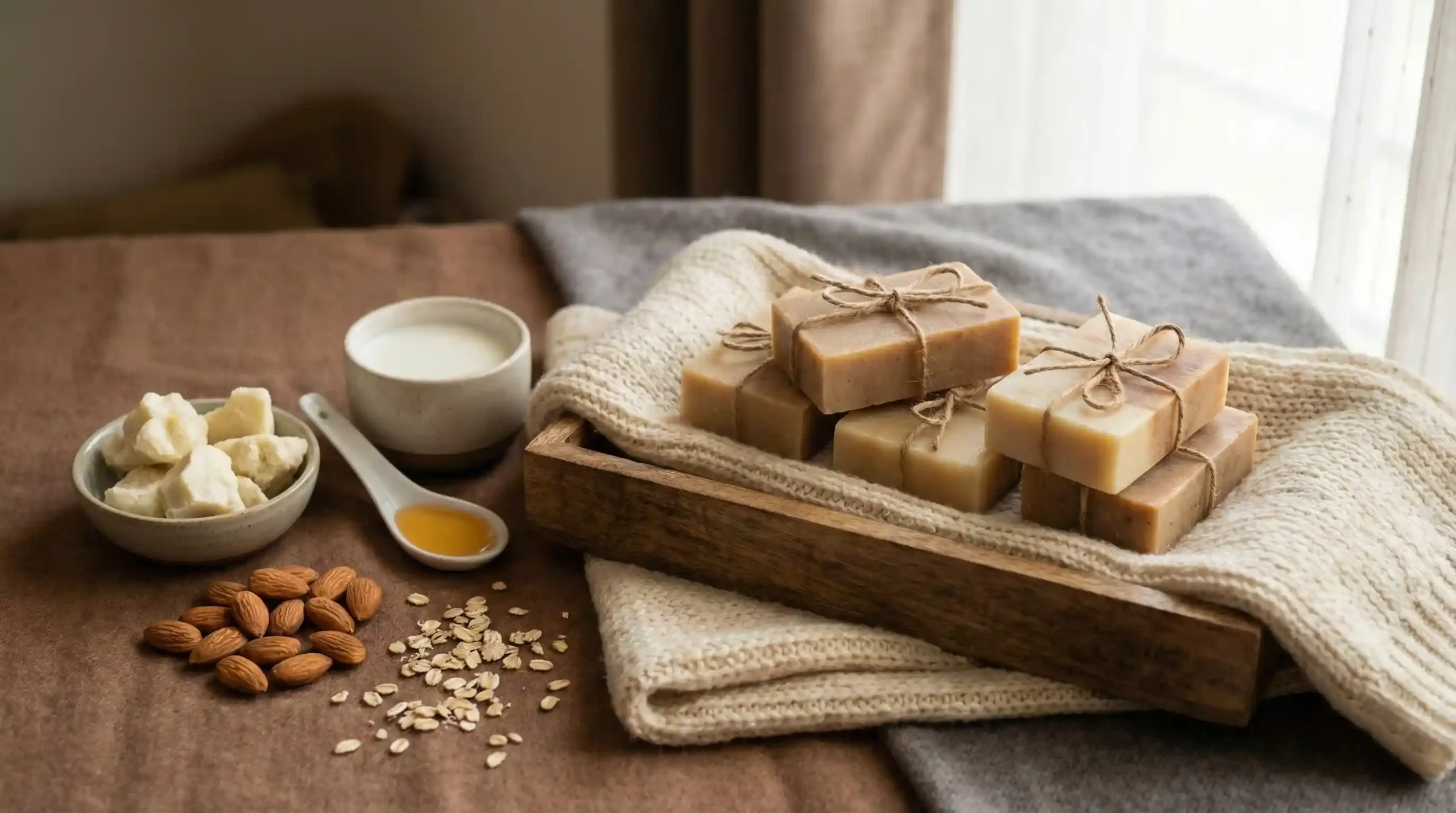
- Milk and Cream: Ingredients like goat milk or even coconut milk add a layer of fats and proteins that soothe irritated, dry patches.
- Honey: A natural humectant that helps the skin hold onto water.
- Oats: If your skin is itchy and red from the cold, ground oats in soap can provide a very gentle exfoliation while calming the irritation.
- Aloe Vera: Provides a soothing touch to wind-burned or chapped skin.
The Role of Base Oils and Butters
The “superfatting” process in handmade soap is what makes it a winter essential. This is when the soap maker adds extra oils or butters that do not turn into soap but remain as pure oils within the bar.
For winter, look for soaps rich in:
- Shea Butter or Cocoa Butter: These are heavyweights in moisture retention. They create a breathable barrier on your skin.
- Coconut Oil: Excellent for cleansing, though in winter, it is best when balanced with other heavier oils.
- Olive Oil: Known for being extremely gentle and hypoallergenic.
- Almond Oil: Rich in Vitamin E, which helps in repairing the skin barrier that gets damaged by the cold.
Difference Between Commercial and Handmade Winter Soaps
If you look at the back of a commercial soap pack, you will see ingredients like Sodium Lauryl Sulfate (SLS) or various synthetic fragrances and preservatives. These chemicals are great for shelf life and bubbles, but they are notorious for drying out the skin.
Handmade soaps usually have a shorter, more recognizable list of ingredients. They don’t last as long in a soap dish (because of that lovely glycerin we mentioned), but they are much kinder to your body. A handmade soap for dry skin in winter feels “creamy” rather than “squeaky.” That squeaky-clean feeling is actually a sign that your skin’s protective oils are gone.
How to Choose the Right Bar
Not all handmade soaps are the same. Some are formulated for oily skin or for summer freshness (like citrus or charcoal soaps). For the dry Indian winter, you should:
- Avoid “Clarifying” soaps: Stay away from charcoal, tea tree, or high-lemon content soaps for a few months.
- Look for “Moisturizing” or “Cream” bars: These will usually contain the butters and milks mentioned earlier.
- Check the Scent: Strong synthetic perfumes can sometimes irritate dry, cracked skin. Essential oils like Lavender or Sandalwood are usually gentler.
- Feel the Texture: A good winter soap often feels slightly softer to the touch than a hard, industrial bar.
Long-Term Skin Comfort
Switching to a handmade soap for dry skin in winter isn’t a one-time fix, but rather a habit. After a week of use, you might notice that you don’t need to rush for the moisturizer the very second you step out of the bathroom. Your skin feels more resilient. The flakiness starts to subside because the skin’s natural barrier isn’t being attacked every morning.
It is also a more mindful way to bathe. Using a bar that has been crafted with care, smelling of natural oils, turns a quick chore into a small moment of self-care during those cold, dark winter mornings.
Conclusion
We often blame the weather for our skin woes, and while the Indian winter is certainly demanding, our choices play a huge role. Moving away from harsh chemicals and embracing the traditional, oil-rich benefits of handmade soap is one of the simplest changes you can make.
If you are tired of the itching, the white marks on your skin, and that constant feeling of tightness, try a well-crafted handmade soap for dry skin in winter. Your skin is your body’s first line of defense; it deserves to be cleaned with something that nourishes it rather than something that strips it bare.


