
Why skin irritations are so common in our climate

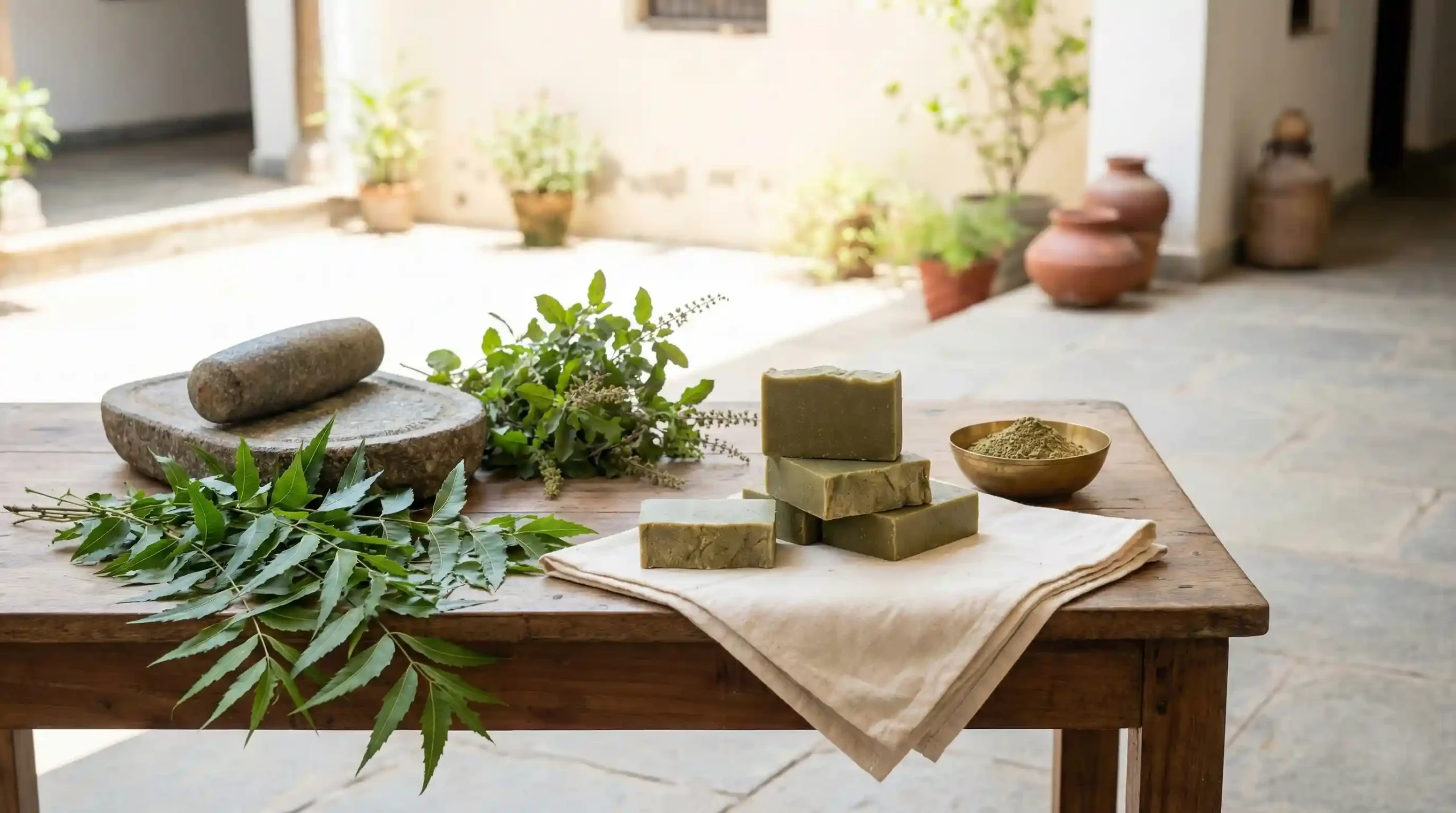
India’s climate is a double-edged sword. While we love the sun, the combination of high heat and extreme humidity creates a perfect breeding ground for skin trouble. When we sweat, the moisture stays trapped in the folds of our skin—under the arms, behind the knees, or along the neckline. This dampness, combined with the dust and pollution of our cities, often leads to fungal patches, sweat rashes, and persistent itching.
For those of us who commute in crowded buses or trains, the physical contact and shared environments also play a role. Skin infections are often just a result of our lifestyle and the environment we live in. We need a hygiene routine that doesn’t just “wash” the skin, but actually supports it in fighting off the daily environmental load.
The traditional wisdom of neem and tulsi
Long before fancy skincare brands existed, every Indian household had a neem tree nearby or a tulsi plant in the courtyard. There is a reason these two plants have remained the backbone of Indian skin hygiene for centuries.
Neem is often called the “village pharmacy” for a reason. It has been used traditionally to wash wounds, treat itchy scalps, and bathe children after they recover from seasonal illnesses. Tulsi, or Holy Basil, is equally respected. It is known for its ability to deep-clean the skin and provide a cooling sensation that is incredibly relieving when your skin feels like it is on fire from a rash.
Using an organic neem and tulsi soap for skin infections allows you to bring that traditional wisdom into a modern, convenient format. Instead of boiling neem leaves in your bathwater every morning—which, let’s be honest, none of us have time for anymore—a well-made soap gives you those same benefits during your daily shower.
Organic soap versus mass-market chemical bars
When your skin is already compromised by an infection or a red, itchy patch, the last thing it needs is a cocktail of synthetic detergents. Most commercial soaps you find in the supermarket are not actually “soap” in the traditional sense; they are synthetic detergent bars. They contain SLS (Sodium Lauryl Sulfate), which creates a lot of foam but also strips away the skin’s natural protective oils.
If you are dealing with a skin infection, stripping the skin makes it even more vulnerable. This is why choosing an organic version is so important. An organic soap is made through the cold-process method, where natural oils are turned into soap without destroying the properties of the herbs. It cleanses the skin without leaving it feeling tight, dry, or “stretchy.”
The importance of gentle cleansing and natural glycerin
One of the biggest advantages of a real organic soap is the presence of natural glycerin. In mass-produced soaps, the glycerin is often removed and sold separately for use in expensive lotions. In a handmade organic soap, the glycerin stays right there in the bar.
When you use an organic neem and tulsi soap for skin infections, the glycerin acts as a humectant. It draws moisture into the skin. Why does this matter for infections? Because dry, cracked skin is much more likely to let bacteria and fungi take hold. By keeping the skin hydrated while the neem and tulsi do their job of cleaning, you are creating a much healthier environment for your skin to recover.
Supportive base oils for irritated skin
A good neem and tulsi soap is only as good as the oils used to make it. Look for soaps that use a base of coconut oil, mahua oil, or neem oil itself.
- Coconut Oil: Provides a deep, antimicrobial cleanse.
- Neem Oil: While the soap contains neem leaves or extracts, using pure neem oil in the base adds an extra layer of protection for the skin.
- Castor Oil: Helps create a creamy lather that soothes the skin while you wash.
These oils ensure that the soap doesn’t just “kill” the germs but also nourishes the skin barrier, which is your body’s first line of defense against future infections.
How to identify a genuine organic soap
With so many products claiming to be “natural” or “herbal,” it can be confusing. A genuine organic neem and tulsi soap for skin infections will usually have a few identifying marks:
- The Color: It shouldn’t be a bright, neon green. Real neem and tulsi soaps are usually earthy, dark green, or brownish because that is the natural color of the herbs when they are processed.
- The Scent: It should smell like the actual plants—a bit medicinal, earthy, and fresh—rather than like a cheap perfume.
- The Texture: It might feel a bit softer than a commercial bar. This is because it lacks the chemical hardening agents used in factories.
Regular hygiene as a support system
It is important to remember that using a natural soap is a habit, not a one-time fix. If you are prone to sweat rashes or fungal issues, consistency is key. Using the soap twice a day—especially after coming home from work or after a workout—helps remove the sweat and bacteria before they have a chance to cause an infection.
It’s about maintaining a “skin-friendly” environment. When you use neem and tulsi regularly, you are keeping the microbial load on your skin low. This doesn’t just help with current irritations; it helps prevent the next one from starting.
Precautions and realistic expectations
While an organic neem and tulsi soap for skin infections is a powerful tool for hygiene, it is not a substitute for medical advice. If you have a severe infection that is spreading, oozing, or causing a fever, you must see a dermatologist.
Natural soaps are meant to support your skin’s health and provide relief from daily discomforts like itching and mild rashes. They work best as a preventive measure or as a gentle way to keep the area clean while you use any prescribed treatments. Also, always do a small patch test on your arm if you have extremely sensitive skin, just to be safe.
Conclusion
At the end of the day, our skin is our largest organ, and it takes a lot of beating in our Indian environment. Choosing an organic neem and tulsi soap for skin infections is a step toward a more mindful, traditional way of looking after ourselves. It’s about moving away from harsh chemicals and moving back toward the ingredients that our land has provided for thousands of years.
By focusing on hygiene, keeping the skin cool, and using the gentle power of neem and tulsi, you can find a level of skin comfort that commercial products often fail to provide. It is a simple change, but for your skin, it can make all the difference in the world.


