
Understanding Tanning in the Indian Context

In India, tanning is more than just a change in skin tone; it is often accompanied by a feeling of heat, dehydration, and sometimes even a slight stinging sensation. When our skin is exposed to strong UV rays, it produces melanin as a defense mechanism to protect the deeper layers of the skin. This results in the darkening we call a tan.
In our climate, the dust and pollution often settle on top of this tanned skin, making it look dull and tired. Most commercial soaps available in the market are quite harsh; they use strong detergents to strip away oil, which can actually make tanned skin feel more irritated and dry. To effectively manage a tan, the goal shouldn’t be to “bleach” the skin, but to soothe the inflammation and gently encourage the skin’s natural renewal process.
The Traditional Role of Goat Milk in Skin Care
Goat milk has been used for centuries in rural India and various other cultures as a soothing agent for the skin. Unlike cow’s milk, goat milk has a pH level that is very close to human skin. This means when you wash with it, you aren’t disrupting your skin’s natural acid mantle.
One of the most important things about goat milk is that it contains Alpha Hydroxy Acids (AHAs), specifically lactic acid. Lactic acid is known for its ability to very gently break down the “glue” that holds dead, tanned skin cells together. Because it is so mild, it doesn’t cause the peeling or redness that chemical peels might. Instead, it slowly helps the newer, fresher skin underneath to come to the surface. For someone dealing with a stubborn tan from a recent holiday or daily field work, this gentle exfoliation is much better than using a rough scrub.
Saffron: The Ancient Ingredient for Balance
Saffron, or Kesar, is perhaps one of the most prized ingredients in Ayurveda. We have always associated it with royalty and luxury, but its benefits for the skin are very practical. Saffron is rich in antioxidants like crocin and crocetin. These compounds help in neutralizing the oxidative stress caused by sun exposure.
When we talk about Goat milk and Saffron soap for tan removal, the saffron plays the role of a brightening agent—not in the sense of changing your natural color, but in restoring the skin’s natural glow. It helps in evening out the skin tone where the tan might be patchy. If you have ever noticed how a tan looks “muddy” or “greyish” after a few days, saffron helps in clearing that dullness, making the skin look healthy and well-rested.
Why Goat Milk and Saffron Work Well Together in Soap
When you combine goat milk and saffron into a single soap bar, you get a balanced product that addresses two needs at once: hydration and repair.
The goat milk provides a creamy, fatty base. It is loaded with Vitamin A and fatty acids that moisturize the skin while the lactic acid does its job. Meanwhile, the saffron works on the pigment and the inflammation. In the Indian heat, skin often becomes “pitta” aggravated—meaning it feels hot and looks red. Both these ingredients have a cooling, “shanti” (calming) effect on the skin.
Using a soap with these ingredients allows you to treat your skin during your daily bath without adding extra steps to your skincare routine. It is a slow and steady approach that respects the skin’s health.
Ayurvedic Soaps vs. Chemical Tan-Removal Products
There is a big difference between a natural, cold-processed Ayurvedic soap and a mass-produced “lightening” soap. Many commercial soaps use ingredients like Kojic acid or high percentages of synthetic fragrances and sulfates. While they might give a feeling of deep cleaning, they often leave the skin feeling tight and “stretchy.”
Natural soaps made with goat milk and saffron usually retain their natural glycerin. Glycerin is a humectant, which means it pulls moisture from the air into your skin. When you are trying to remove a tan, the last thing you want is dry skin, because dry skin looks darker and more damaged. Choosing a traditional soap ensures that while the tan is being addressed, the skin’s moisture barrier remains intact.
How to Choose a Genuine Soap
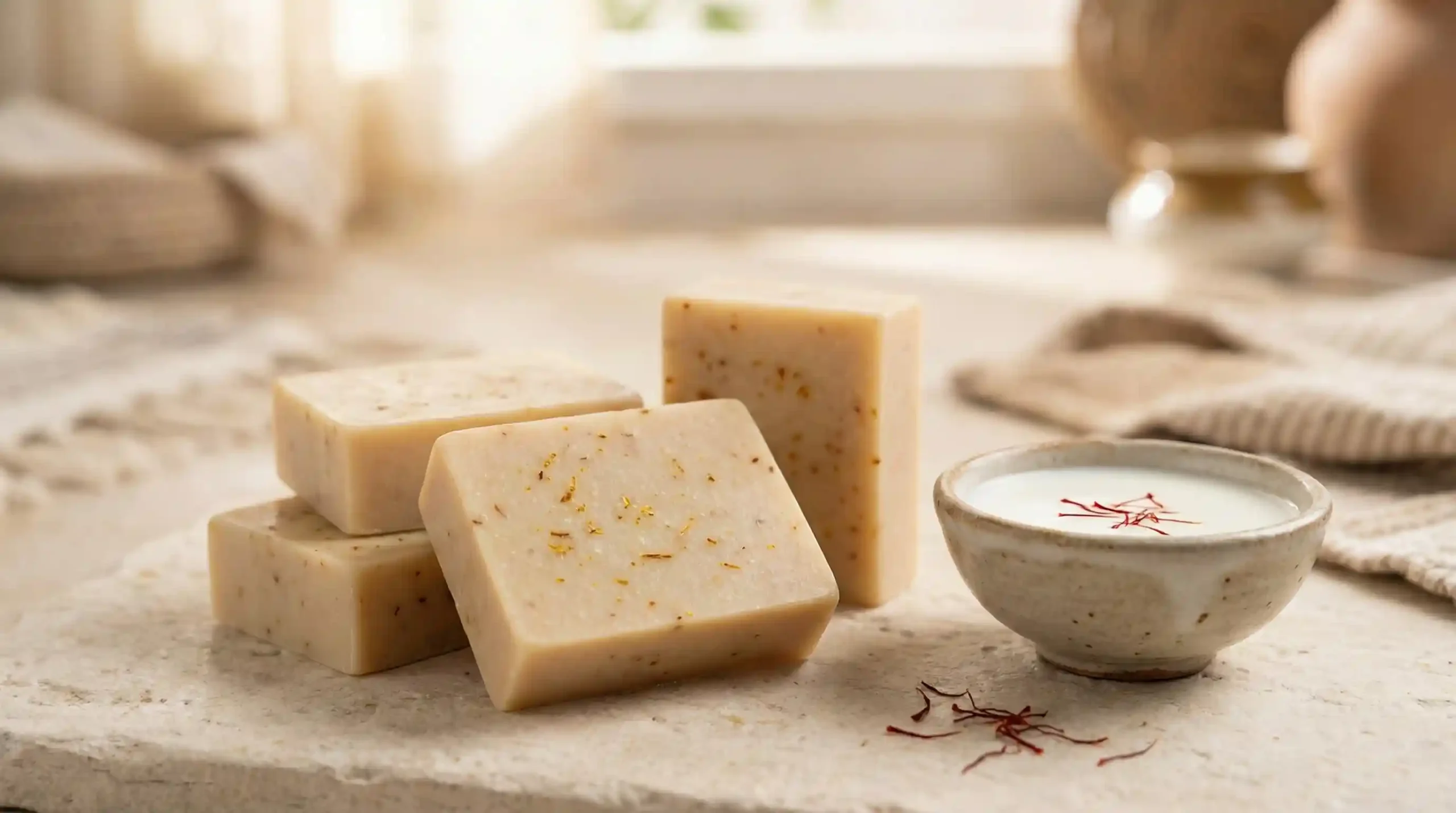
Not all soaps labeled “natural” are created equal. When looking for a Goat milk and Saffron soap for tan removal, check the texture and the scent. A real goat milk soap often has a creamier, denser lather rather than a big, foamy, bubbly one (which usually indicates synthetic surfactants).
The color of the soap should ideally be a soft cream or a pale orange/yellow from the saffron, rather than a bright, neon dye. Also, look for soaps that list goat milk and saffron high up on the ingredient list. The closer these ingredients are to the top, the more effective the soap will be.
Consistency and Realistic Expectations
It is important to be honest about results. No soap can “wash away” a tan in one or two uses. Skin takes about 28 to 30 days to renew its outer layer. Therefore, you should use the soap consistently for at least a month to see a visible difference in your skin’s clarity.
A tan is the skin’s way of saying it has been through stress. We should treat it with patience. Along with using a good soap, it is also essential to protect the skin from further damage. Wearing a cotton scarf, using an umbrella, or applying a basic sunscreen when outdoors will help the goat milk and saffron do their job more effectively. If you keep getting tanned every day while trying to remove an old tan, the process will naturally take longer.
A Balanced Approach to Skin Health
At the end of the day, our skin is a reflection of how we treat ourselves. Living in India means accepting the sun as a part of our lives, but we don’t have to live with the discomfort of burnt or dull skin.
Using a Goat milk and Saffron soap for tan removal is a way of returning to the basics. It is about using ingredients that our land provides to heal the damage caused by our climate. It’s a gentle, nourishing, and honest way to care for yourself. By choosing natural ingredients over harsh chemicals, you are not just removing a tan; you are feeding your skin the nutrients it needs to stay resilient against the elements.


