
The Deep Roots of Coconut Oil in Indian Skincare

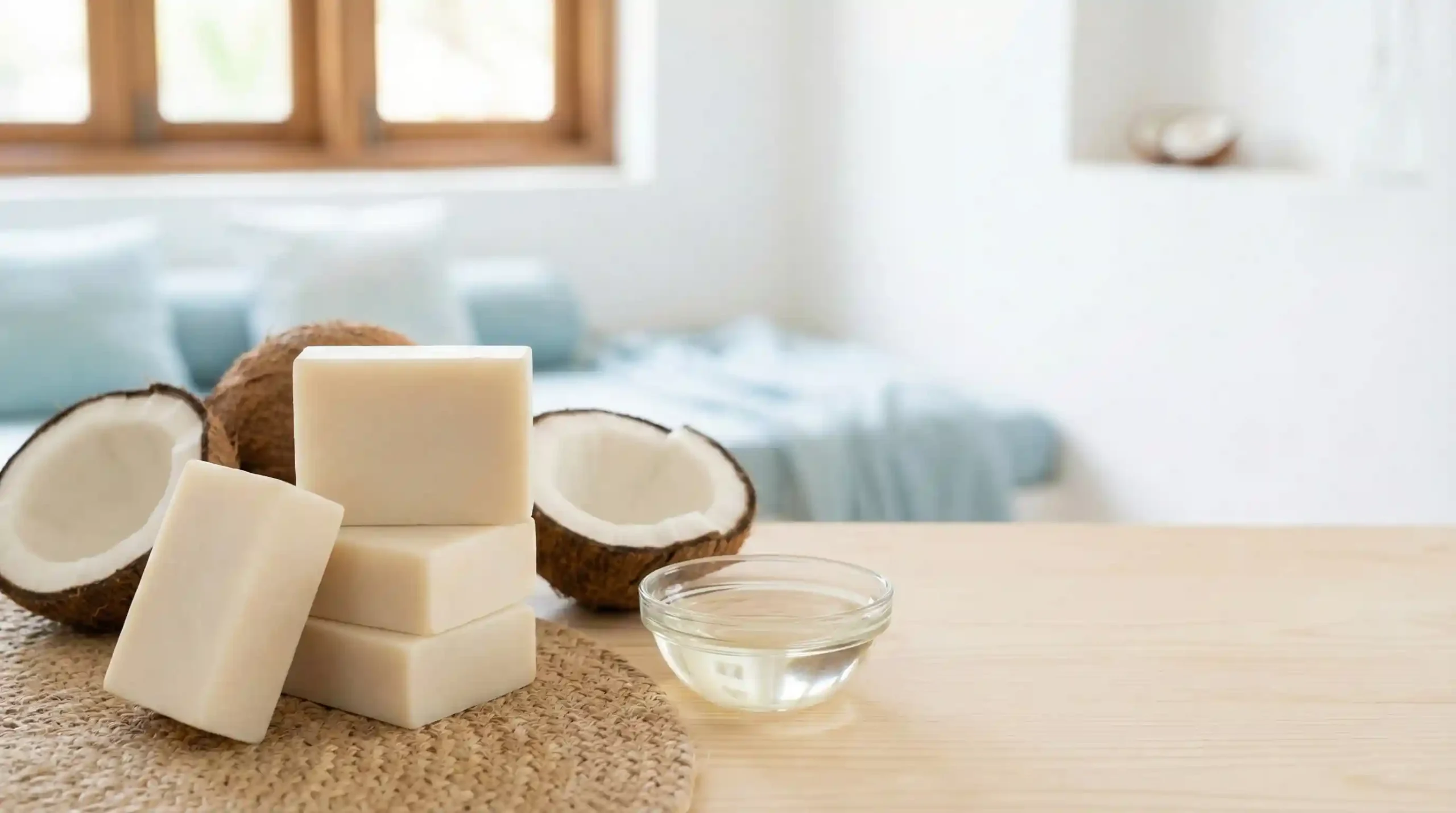
Our connection with coconut oil isn’t accidental. In a country with diverse climates—from the humid coasts of Kerala to the dry heat of the north—coconut oil has remained a constant. Historically, it was the go-to remedy for almost everything. Before fancy moisturizers existed, a simple application of coconut oil kept the skin supple and protected.
This traditional wisdom exists because coconut oil is incredibly stable and compatible with human skin. It doesn’t just sit on the surface; it feels like it belongs there. When this same oil is used as the primary base for a soap, it brings those centuries-old benefits into a modern, convenient form. It allows us to maintain that traditional care even when we are in a hurry to get to work or finish our morning chores.
How Coconut Oil Soap Differs from Commercial Bars
If you look at the back of a standard commercial soap wrapper, you will see a long list of chemical names that are hard to pronounce. Many of these are synthetic detergents or “syndet” bars. They are designed to create a lot of foam and remove grease, but in doing so, they often strip away the natural oils that your skin produces to stay healthy.
A genuine coconut oil soap is different. It is usually made through a process called saponification, where the oil reacts with an alkali to turn into soap. Unlike mass-produced bars that use tallow (animal fat) or cheap petroleum derivatives, a coconut-based bar relies on the fatty acids found naturally in the fruit. The result is a bar that cleanses effectively without leaving your skin feeling tight, itchy, or “squeaky clean” in a damaging way.
Balancing Deep Cleansing with Moisture
There is a common misconception that a soap that cleans well must be harsh. Coconut oil soap proves this wrong. Coconut oil contains lauric acid, which is excellent at lifting away dirt, sweat, and environmental pollutants—something we deal with daily in Indian cities.
However, the beauty of coconut oil is its ability to cleanse while being mindful of the skin’s barrier. When formulated correctly, the soap removes the “bad” oils (like excess sebum and dirt) while leaving enough of the “good” oils to keep the skin’s defense system intact. This balance is crucial. If you strip the skin too much, it panics and produces even more oil, leading to a cycle of breakouts or persistent dryness.
The Role of Natural Glycerin
One of the best-kept secrets of traditional soap making is glycerin. In large-scale industrial soap manufacturing, glycerin—a natural byproduct of the soap-making process—is often extracted and sold separately as a high-value ingredient for expensive lotions and creams. This leaves the remaining soap bar harsh and drying.
In a traditional coconut oil soap, the glycerin is usually left right where it belongs: in the bar. Glycerin is a humectant, meaning it attracts moisture from the air to your skin. When you wash with a bar rich in both coconut oil and its natural glycerin, you’re not just cleaning; you’re providing a small dose of hydration every time you lather up. You might notice that you don’t need to reach for the moisturizer immediately after stepping out of the shower.
Comfort for Dry and Sensitive Skin
For those of us with dry or sensitive skin, the Indian climate can be tricky. The transition from air-conditioned offices to the outdoor heat can sap moisture quickly. Many people find that their skin gets flaky or develops white scratch marks during the change of seasons.
Using a coconut oil soap provides a layer of comfort. It is gentle enough for daily use and doesn’t irritate sensitive patches. Because coconut oil has natural soothing properties, it helps calm the skin. It’s a safe choice for the whole family, from children to the elderly, because it lacks the aggressive synthetic fragrances and dyes that usually trigger reactions.
How to Identify Genuine Coconut Oil Soap
With so many brands claiming to be “natural,” it can be hard to tell what is real. A genuine coconut oil soap will usually have a shorter ingredients list. It should feel heavy for its size and have a creamy, rich lather rather than a bubbly, airy one.
The scent is another giveaway. While some are infused with essential oils like sandalwood or neem, the base shouldn’t smell like a laboratory. It should feel earthy and clean. If a bar is neon-colored or has a very strong, perfume-like smell that lingers for hours, it likely contains synthetic additives that negate the benefits of the coconut oil base.
Common Mistakes When Choosing Your Soap
One of the biggest mistakes people make is choosing a soap based purely on its fragrance or how much it foams. We have been conditioned to think that more foam equals better cleaning, but often, that foam is created by SLS (Sodium Lauryl Sulfate), which can be very drying.
Another mistake is not checking the “TFM” or Total Fatty Matter. In India, soaps are graded by their TFM content. A higher TFM usually indicates a better quality soap that is less likely to dry out your skin. When looking for a coconut oil soap, ensure that the oil itself is high up on the ingredient list, not just added in a tiny percentage for marketing purposes.
Long-term Benefits of Consistent Use
Skincare isn’t about overnight miracles; it’s about consistency. When you switch to a coconut oil soap, you might not see a massive change in one day. But over two or three weeks, you will likely notice that your skin feels smoother. The rough patches on your elbows might soften, and that “tight” feeling after a bath will start to disappear.
By using something that aligns with our traditional roots and natural biology, we give our skin the chance to repair itself. It is a slow, steady improvement that leads to long-term skin health and comfort.
A Return to Simplicity
In a world full of complex skincare routines and ten-step processes, there is something deeply satisfying about returning to a simple bar of coconut oil soap. It respects the wisdom of our elders while meeting the needs of our modern lives. It’s about choosing honesty over hype and health over harsh chemicals.
Taking a few extra minutes to choose a soap made with care and quality ingredients is a small but meaningful way to look after yourself. After all, our skin is our largest organ, and it deserves the same traditional, natural nourishment that we’ve trusted for centuries.


